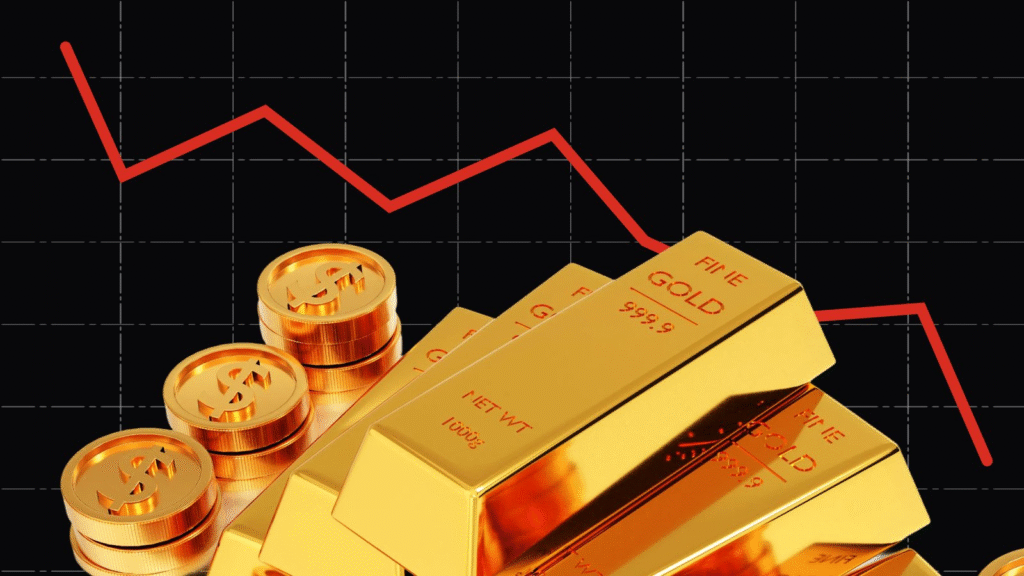
Most investors believe price is the first signal. They watch charts, monitor daily movements, and look for patterns that might reveal where gold is headed next. But price is rarely the starting point. In modern markets, gold often begins moving long before significant price changes appear on a chart. Beneath every visible move exists an information layer where expectations, positioning, liquidity, and capital allocation begin influencing market behavior. Understanding this layer can provide a deeper perspective on how gold markets actually operate.
Price Is an Outcome, Not a Beginning
Price is often treated as the primary source of information. In reality, price is usually the final result of decisions already being made throughout the market.
Before price moves, investors, institutions, and market participants are continuously processing information and adjusting their positions.
What appears on a chart is often the outcome of activity that started much earlier.
The Market Processes Information Continuously
Financial markets never stop interpreting information.
Participants constantly evaluate:
- Economic expectations
- Interest rate outlooks
- Inflation forecasts
- Liquidity conditions
- Risk sentiment
- Capital allocation opportunities
These factors influence decision-making long before they create visible price movement.
Expectations Often Move Gold First
One of the most important forces in modern markets is expectation.
Investors do not simply react to events.
They react to what they believe will happen next.
As expectations change, capital begins repositioning itself in anticipation of future outcomes.
This repositioning can start influencing gold before the broader market recognizes the shift.
Liquidity Reveals Hidden Market Intentions
Liquidity often provides clues before price changes become obvious.
When liquidity conditions change:
- Market participation shifts
- Risk appetite adjusts
- Capital allocation evolves
- Institutional behavior changes
These developments can create pressure beneath the surface long before price reflects the adjustment.
Positioning Creates Early Signals
Large investors rarely wait for confirmation.
They often build or reduce exposure based on future expectations rather than current headlines.
As positioning changes:
- Capital begins moving
- Exposure levels adjust
- Market pressure develops
Price may remain stable initially, but the underlying structure of the market is already changing.
Why Headlines Often Arrive Late
Many investors rely on news to explain market movement.
The challenge is that markets often move before the narrative becomes visible.
By the time a headline explains a price change:
- Positioning may already be established
- Liquidity may already have shifted
- Capital may already have rotated
The information layer often acts before public interpretation catches up.
Gold Reflects More Than Demand
Traditional analysis frequently focuses on buying and selling activity.
Modern gold markets are influenced by a broader range of information:
- Global liquidity trends
- Monetary policy expectations
- Institutional allocation decisions
- Cross-market capital flows
- Portfolio rebalancing activity
These forces interact continuously beneath the surface.
The Hidden Advantage of Context
Price tells investors what happened.
Context helps explain why it happened.
The information layer provides that context.
By understanding the forces influencing market behavior before price moves, investors gain a more complete picture of market conditions.
The Belora Perspective
At Belora, we believe understanding gold requires looking beyond charts alone. Price is important, but it represents only the visible layer of a much larger process. Liquidity, expectations, positioning, and capital movement often shape market behavior before price fully reflects those changes. Understanding these forces allows investors to interpret gold through a broader and more informed lens.
Final Insight
The information layer that moves gold before price consists of expectations, liquidity conditions, positioning activity, and capital flows. These forces continuously shape market behavior beneath the surface. Price eventually reflects their impact, but it is rarely where the process begins.
In modern gold markets, the greatest insights often come not from watching price itself, but from understanding the information that influences it before it becomes visible.