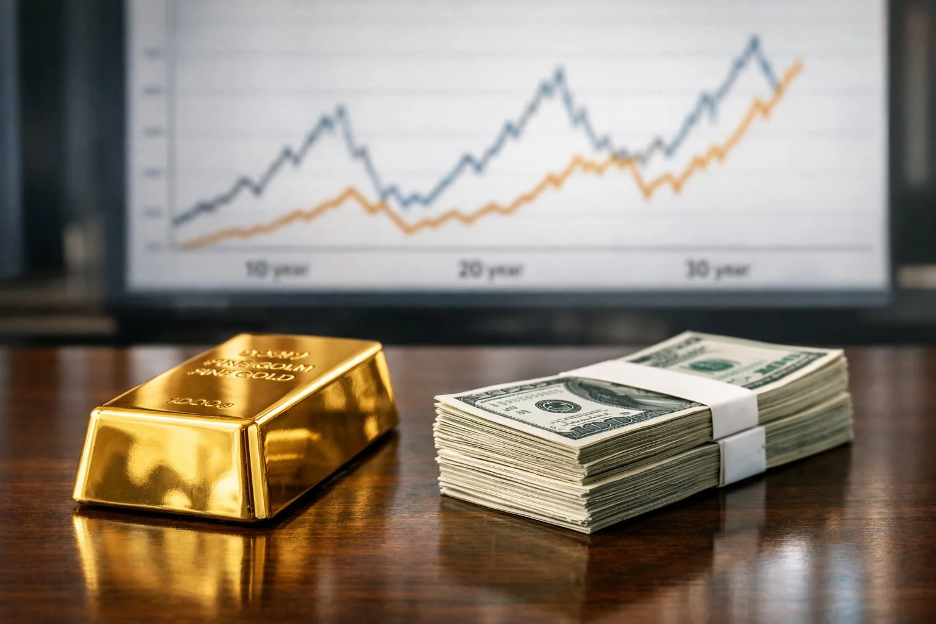
Most investors rely on charts to understand what is happening in the gold market. They watch price action, identify trends, and wait for confirmation before making decisions. While charts are valuable tools, they often tell investors what has already happened rather than what is about to happen.
The reality is that markets often know before charts do. Changes in liquidity, institutional positioning, and demand dynamics frequently occur long before they become visible through price movement. By the time a trend appears obvious on a chart, the underlying market forces may have been developing for weeks or even months.
Why Charts Are a Reflection, Not a Cause
A chart is a visual representation of completed transactions. It shows the outcome of buying and selling activity that has already taken place.
Charts can tell investors:
- Where price has been
- How the market reacted
- What trends are currently visible
But charts cannot directly show:
- Institutional accumulation
- Changes in liquidity conditions
- Shifts in investor sentiment
- Emerging demand patterns
Price is often the final result of forces that have been building beneath the surface.
The Market Moves Before Price Reacts
Before major gold price movements occur, market participants are already making decisions.
Large investors may:
- Increase exposure gradually
- Rebalance portfolios
- Respond to macroeconomic changes
- Prepare for future market conditions
These actions create subtle shifts in market structure before they become visible on a chart. This is why professional investors often pay attention to market behavior rather than waiting for price confirmation alone.
Liquidity Often Changes First
Liquidity is one of the earliest indicators of changing market conditions.
When liquidity expands:
- Market participation increases
- Trading activity becomes smoother
- Capital flows more freely
When liquidity contracts:
- Volatility can increase
- Market efficiency may decline
- Investor behavior often changes
These developments can occur before significant price movement appears on a chart.
Institutional Activity Leaves Clues
Institutional investors rarely make decisions based on short-term chart patterns alone. They focus on economic trends, capital flows, and long-term positioning.
As institutions adjust exposure:
- Demand begins to shift
- Market depth changes
- Trading behavior evolves
The chart eventually reflects these changes, but the activity itself starts much earlier.
Why Retail Investors Often Arrive Late
Many retail investors wait for obvious confirmation before acting. They want to see a clear trend, a breakout, or a strong move before making a decision.
The challenge is that by the time these signals appear:
- Much of the move may already be underway
- Market conditions may have changed
- Risk-to-reward opportunities may be less attractive
This creates a cycle where investors react to visible information instead of understanding what caused it.
Understanding Market Structure
Market structure refers to the forces operating behind price movement.
This includes:
- Liquidity conditions
- Capital flows
- Institutional participation
- Supply and demand dynamics
- Market depth
Understanding structure helps investors recognize why markets move rather than simply observing that they moved.
Why Smart Investors Look Beyond the Chart
Experienced investors use charts as one piece of information, not the entire decision-making process.
They also consider:
- Macroeconomic trends
- Central bank activity
- Investor positioning
- Market liquidity
- Demand behavior
This broader perspective provides context that charts alone cannot offer.
The Difference Between Seeing and Understanding
Anyone can see a price chart. Understanding the forces behind it is what creates an advantage.
When investors focus only on price:
- They react to outcomes
When investors focus on structure:
- They understand causes
This distinction often separates informed decisions from emotional reactions.
Final Insight
Charts are valuable, but they are not the starting point of market movement. They are the final expression of countless decisions, transactions, and structural shifts that occurred beforehand. The gold market often knows before the chart does. Investors who understand liquidity, positioning, demand, and market structure gain a deeper view of what is happening beneath the surface. Because in modern gold investing, the most important signals often appear before the chart reveals them.